

Every day we’re surrounded by headlines.
Wars.
Political arguments.
Crime.
Economic uncertainty.
Natural disasters.
If this is all we see, it’s easy to believe the world is becoming a frightening place.
Without realising it, we begin to build our understanding of entire countries from thirty-second news reports and social media clips. We start to imagine places we’ve never visited and people we’ve never met.
I know, because I’ve done the same.
Before travelling abroad on my own, I carried those assumptions with me. I found myself asking the same questions many travellers ask.
Is it really safe?
What if something happens?
Am I making the right decision?
Those fears felt real.
But they weren’t based on my own experience.
They belonged to stories I’d absorbed over many years.
Then I travelled.
And something unexpected happened.
The world I found wasn’t the world I had imagined.
I discovered people opening their shops every morning, parents walking their children to school, families eating together, couples sitting in cafés, fishermen preparing their boats, market traders laughing with customers and neighbours greeting one another.
In other words, I found ordinary life.
It made me realise something important.
The news has an impossible job.
Its purpose is to tell us when something unusual happens.
Peace isn’t breaking news.
Kindness rarely makes the front page.
Communities quietly helping one another don’t generate millions of clicks.
Conflict does.
Fear does.
Division does.
That doesn’t mean the news is wrong.
It means it is incomplete.
For every dramatic headline we read, millions of people around the world simply wake up, go to work, care for their families and hope tomorrow will be a little better than today.
Those stories are rarely told.
Travel reminded me that behind every country’s politics are ordinary people.
People who worry about paying the bills.
People who love their children.
People who enjoy sharing food with friends.
People who laugh.
People who dream.
People who are far more like us than we often imagine.
Perhaps that is the greatest lesson travel can teach us.
Not that every place is perfect.
No country is.
Not that the world has no dangers.
It does.
But that reducing an entire nation to its worst headlines means we never get to meet the people who actually live there.
The more I travelled, the less interested I became in stereotypes and the more interested I became in conversations.
I’ve learned more from chatting to café owners, hotel staff, shopkeepers and fellow travellers than I ever could from reading another sensational headline.
Those conversations reminded me that humanity has far more in common than our differences suggest.
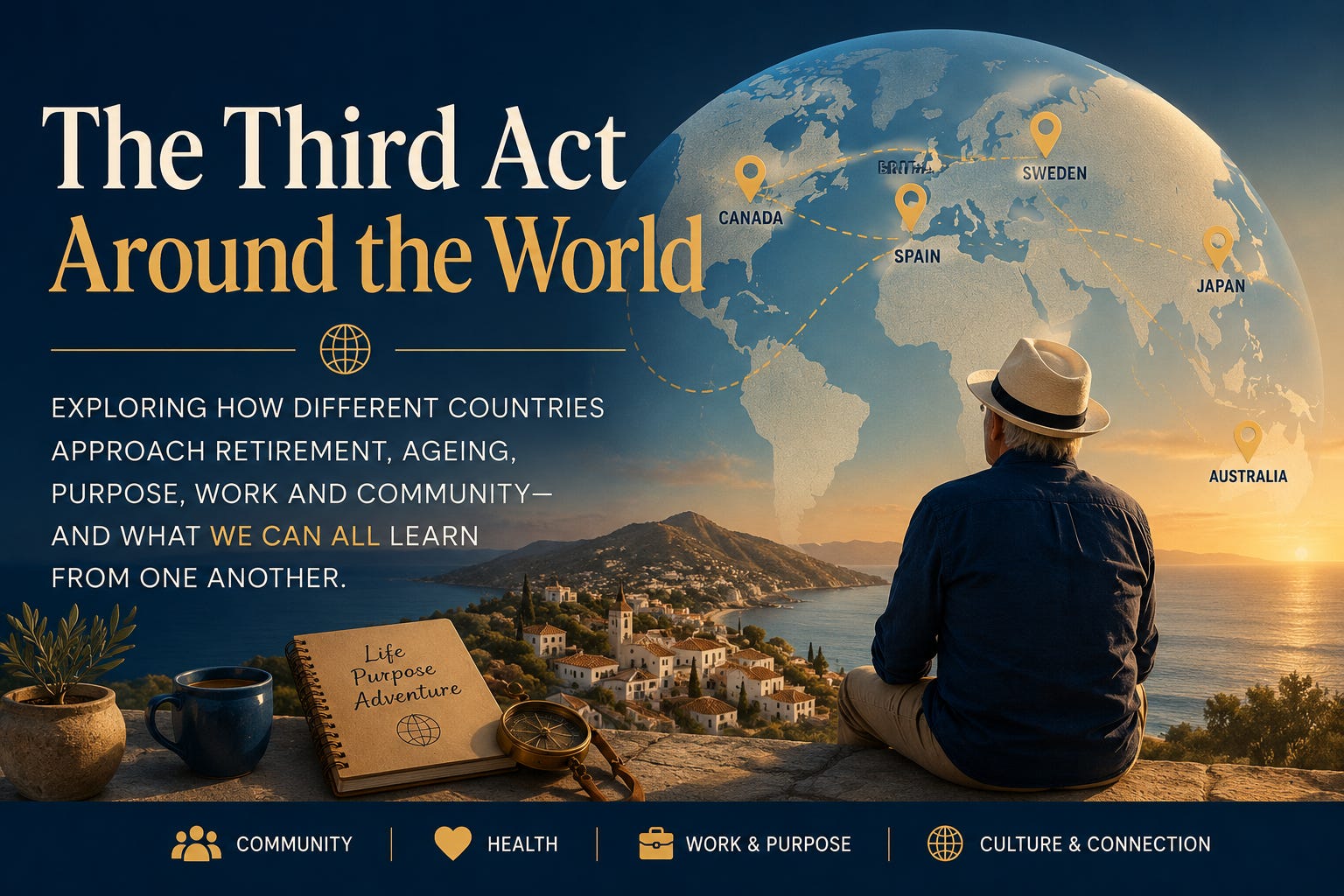
Maybe that’s what The Third Act is really about.
Remaining curious.
Questioning our assumptions.
Continuing to learn.
Allowing experience to challenge opinion.
Because if we stop exploring the world, we risk seeing it only through someone else’s eyes.
Perhaps the world beyond the headlines isn’t perfect.
Perhaps it’s simply more human.
And maybe that’s exactly what we need to remember.
If this article resonated with you, please consider sharing it with someone who enjoys thoughtful conversations about life, travel and the changing world around us.
Restack, subscribe, and join me for more reflections in The Third Act Around the World.