

5 July 2045
Dear Thomas,
Most biographies follow a predictable structure.
A beginning.
A middle.
An end.
The details change.
The shape remains.
You are born.
You discover who you are.
You spend the rest of your life becoming that person.
At least that is the story most people are told.
Then I met Samuel.
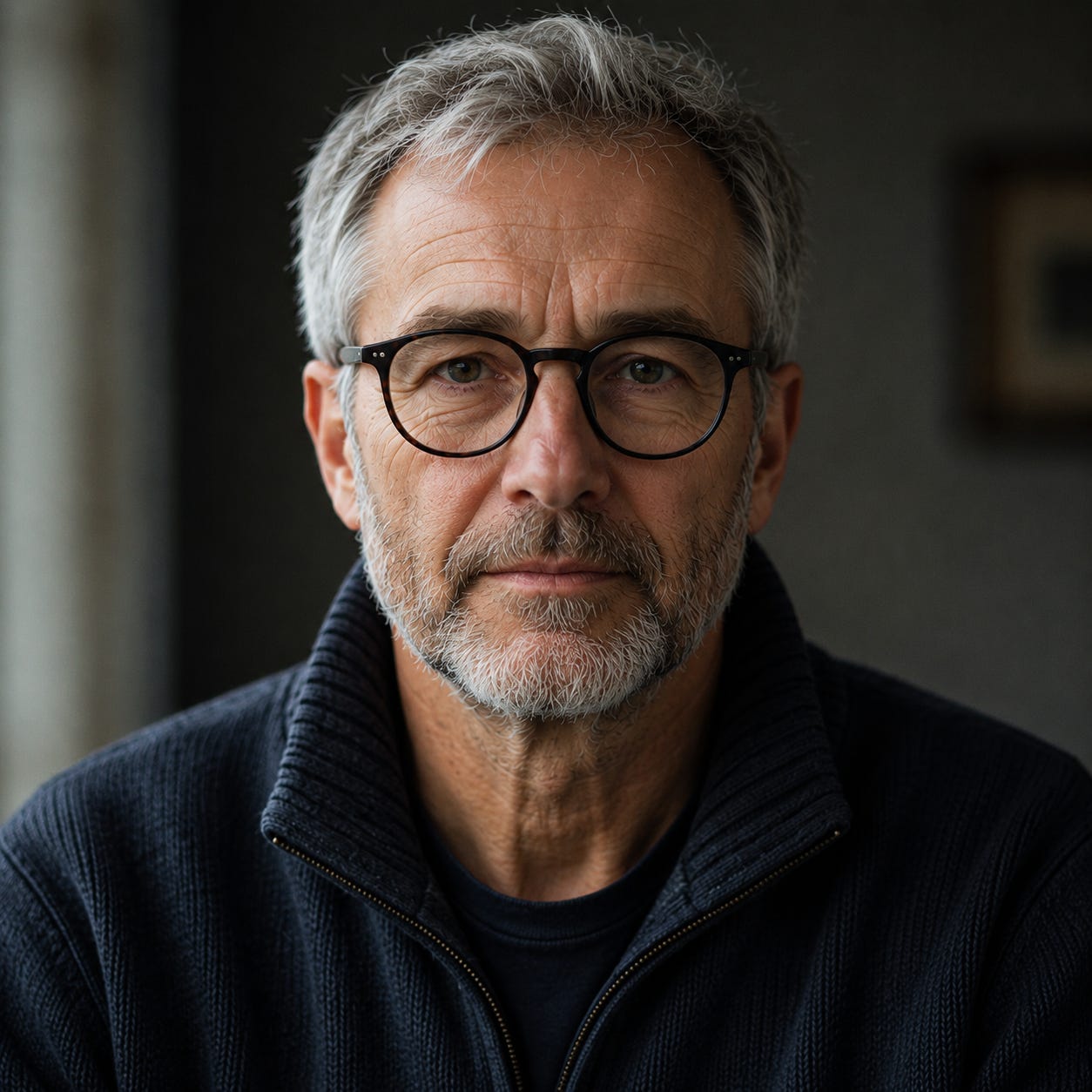
Samuel was ninety years old.
And by his own estimation, he had lived three entirely different lives.
Not chapters.
Lives.
When I first met him, he was sitting outside a small marina repairing a wooden boat.
His hands moved slowly.
Carefully.
The movements of someone who had learned patience the hard way.
He looked up as I approached.
“You’re Michael.”
I smiled.
Arthur had trained half the country to remember names.
Samuel laughed.
“No.”
Then he pointed toward a handwritten note in his pocket.
“At my age, I cheat.”
I liked him immediately.
We spent the afternoon talking.
Eventually, I asked him about the three lives.
He smiled.
“Which one?”
“Any of them.”
He leaned back.
“Well, the first one ended when I was thirty-eight.”
That was not the answer I expected.
Samuel explained.
His first life was built around certainty.
He became an engineer.
Married young.
Bought a house.
Built a career.
Everything followed the plan.
Then the company collapsed.
The marriage ended.
Within two years, the future he had spent two decades constructing disappeared.
“I thought my life was over.”
He laughed.
“Turns out it was just changing.”
His second life began almost by accident.
Unable to find work in his old field, he accepted a temporary teaching role.
Temporary became permanent.
Permanent became a calling.
For the next thirty years, he taught thousands of students.
Many remained in contact long after leaving school.
One became a surgeon.
Another became a writer.
Another became a politician.
Samuel smiled.
“I don’t remember teaching them equations.”
“What do you remember?”
“Teaching them confidence.”
That answer reminded me of the Museum of Ordinary Lives.
The invisible influence people have on one another.
The impact that rarely appears in official records.
His second life ended when he retired.
Or rather, when he attempted to retire.
The attempt lasted six months.
Apparently, Samuel was terrible at retirement.
“I got bored.”
There was no drama in the statement.
Just honesty.
He missed learning.
Missed creating.
Missed purpose.
So at sixty-eight, he bought an old boat.
Not because he knew anything about boats.
Because he didn’t.
That decision launched his third life.
He learned sailing.
Boat restoration.
Marine history.
Navigation.
Photography.
Writing.
The list seemed endless.
He spent years travelling along coastlines.
Meeting people.
Collecting stories.
At eighty-two, he published his first book.
At eighty-six, he learned digital design.
At eighty-eight, he started mentoring young entrepreneurs.
At ninety, he was rebuilding a boat.
And planning another project.
I finally interrupted.
“When do you stop?”
Samuel looked genuinely confused.
“Stop what?”
“Starting again.”
He stared out toward the water.
For a long time.
Then he answered.
“When I stop being curious.”
The simplicity of the response made me laugh.
Yet beneath it was something profound.
Many people think reinvention requires courage.
And it does.
But Samuel believed curiosity was even more important.
Fear asks:
“What if this goes wrong?”
Curiosity asks:
“I wonder what happens if I try?”
The two questions lead in very different directions.
As the afternoon continued, I noticed something else.
Samuel never spoke about finding himself.
Modern culture loves that phrase.
Finding yourself.
As though somewhere inside us exists a finished person waiting to be discovered.
Samuel rejected the idea entirely.
“You don’t find yourself.”
“What do you do?”
“You build yourself.”
Then he smiled.
“And occasionally rebuild yourself.”
That sentence may be one of the most important lessons I have encountered all year.
Because so many people become trapped by old identities.
The worker.
The parent.
The spouse.
The expert.
The retired person.
Useful descriptions.
Dangerous prisons.
At some point, they stop describing who we were.
And start limiting who we might become.
Before leaving, I asked Samuel whether he had a favourite of his three lives.
The engineer.
The teacher.
The explorer.
He considered the question carefully.
Then shook his head.
“No.”
“Why not?”
He smiled.
“Because each one taught me something the others couldn’t.”
The engineer taught discipline.
The teacher taught service.
The explorer taught wonder.
Remove any one of them and the person sitting before me would have been different.
Less complete.
As the sun began setting over the marina, Samuel packed away his tools.
Then he pointed toward the horizon.
“When you’re young, you think life is a road.”
I waited.
“When you’re older, you realise it’s a series of shorelines.”
I wasn’t sure I understood.
He smiled.
“Every time you think you’ve reached the end, another coastline appears.”
I thought about that all the way home.
Perhaps the greatest lie people tell themselves is that their story has already been written.
That their future is simply an extension of their past.
Samuel’s life suggested otherwise.
Three times he had become someone new.
Not because he planned it.
Because he remained open to it.
And maybe that is the secret.
Not knowing exactly who you will become.
But refusing to believe you are finished.
As I write this letter, Thomas, I find myself increasingly suspicious of labels.
Especially the ones we place upon ourselves.
Because every label contains an invisible sentence:
“This is who I am.”
And sometimes the most important thing we can do is add three more words.
“For now.”
Michael
Reflection
Identity is not a destination.
It is a conversation between who we have been and who we might still become.
The healthiest people are often those willing to keep the conversation going.
Next
The Day Michael Read His Own Obituary
As part of an unusual reflection exercise, citizens are invited to write the obituary they hope will one day be written about them.
Michael expects it to be uncomfortable.
He does not expect it to reveal how differently he wants to live the years he has left.