

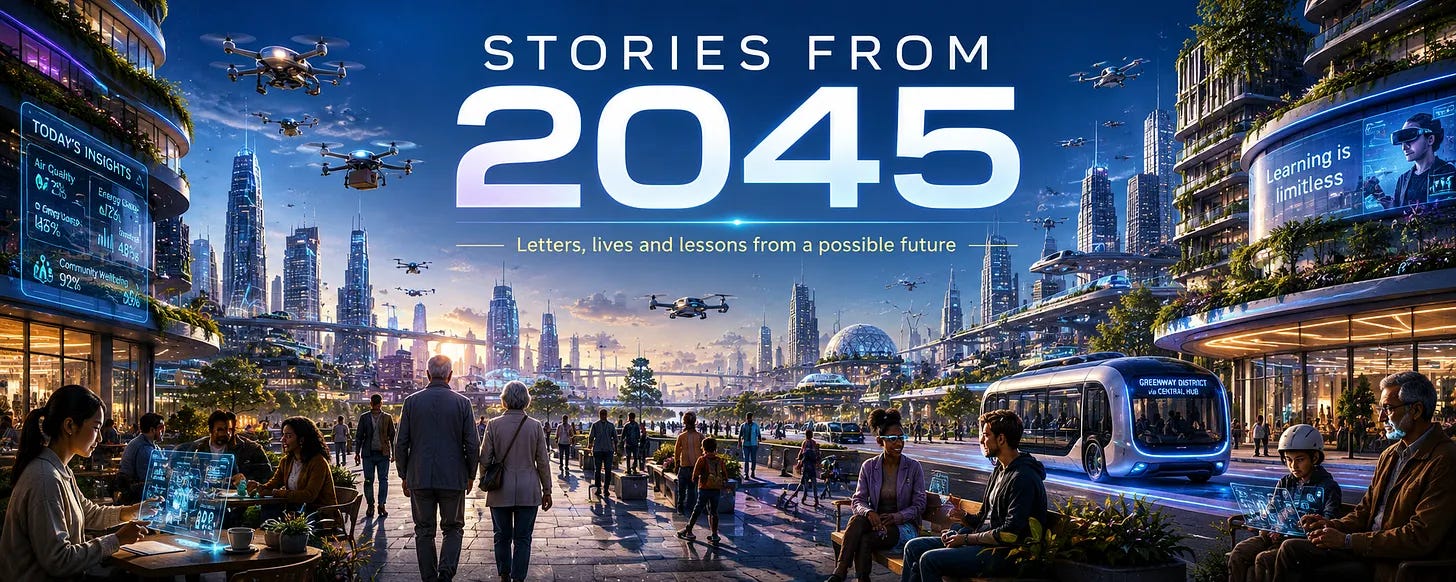
For most of human history, work was more than a way to earn a living.
It shaped our routines.
Our identities.
Our communities.
When meeting someone for the first time, one question often came before all others:
“What do you do?”
In 2045, that question has become largely meaningless.
After decades of rapid advances in artificial intelligence, robotics and automation, the final human-operated professions were retired. Machines became capable of performing almost every task faster, safer and more efficiently than their human counterparts.
At first, people worked alongside intelligent systems.
Then they supervised them.
Eventually, the systems no longer required supervision.
The transition took place over many years, but its conclusion arrived on a single day that historians would later call:
The Last Retirement.
In response, governments around the world introduced Universal Basic Income and prohibited human employment in most sectors where autonomous systems could perform the work more effectively. The decision was controversial, but supporters argued it would eliminate poverty, improve safety and allow people to pursue lives free from economic necessity.
The economic problem had been solved.
The human problem had not.
For the first time in history, millions of people faced a question that had never been asked on such a scale:
If survival is guaranteed, what gives life meaning?
This series follows the lives of ordinary people living through that transition.
Not politicians.
Not technology executives.
Not economists.
Just people.
People were trying to discover who they are in a world that no longer needs them to work.
Our first story follows Michael Harris.
A sixty-five-year-old former systems manager who received an email at 09:17 on the morning of 15 March 2045.
At 09:17, Michael Harris received an email.
By 09:18, the career he had spent forty-seven years building was history.
Michael's Story is now complete. Next Story The Continuence (Coming Soon)
This Story will soon be available as an e-book, including themed artwork
Artwork will be available as Standalone A4 & A3 Posters on Third Act Creative
.