

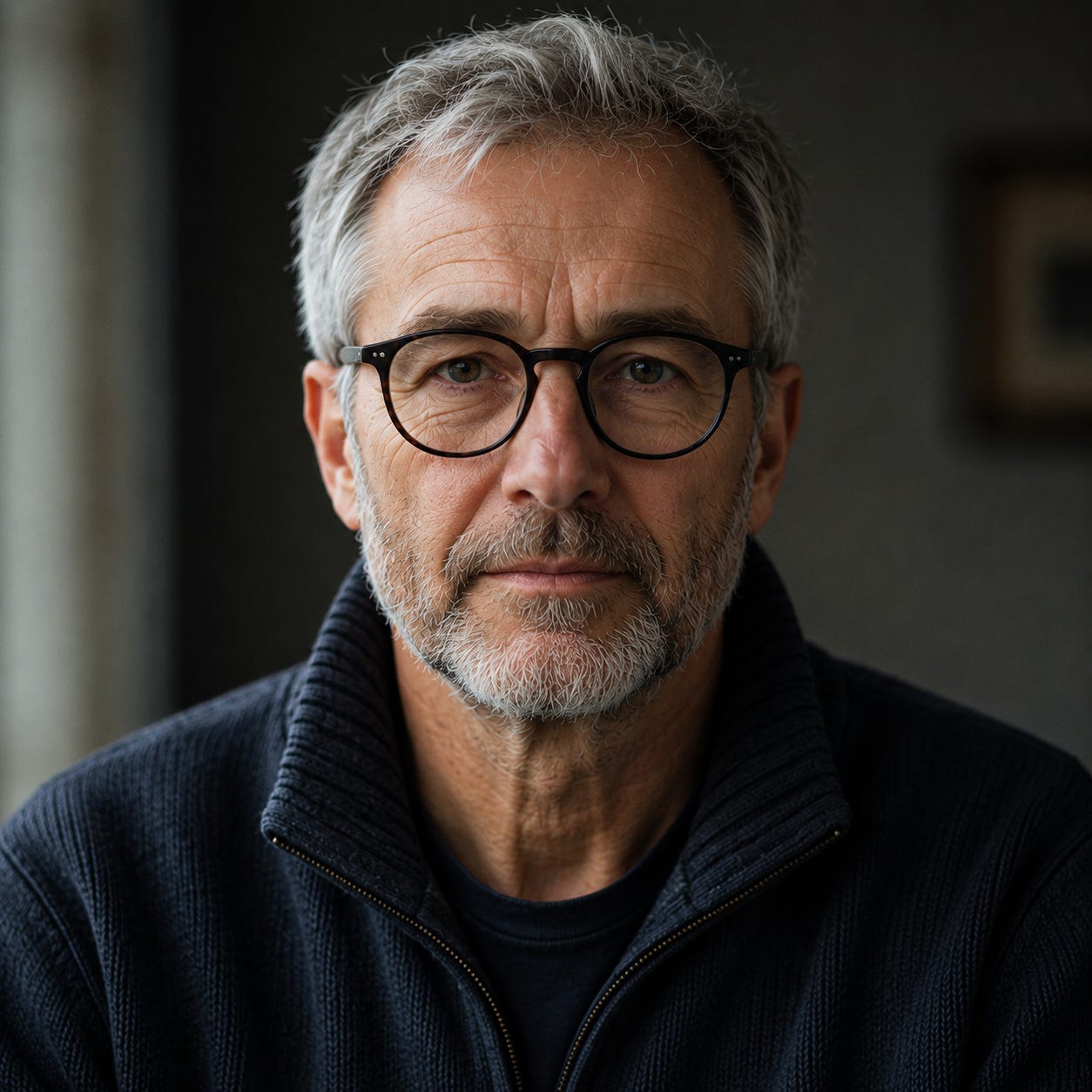
Michael’s Story: The Last Human Queue
22 March 2045
Dear Thomas,
I found something today I thought had vanished forever.
A queue.
Not a virtual queue.
Not a digital waiting room.
Not an AI scheduling system.
A real queue.
Made of actual people.
Standing patiently.
Waiting.
Talking.
Laughing.
Complaining.
Living.
You probably find that difficult to understand.
By your generation’s standards, queues are considered a design failure.
Algorithms schedule everything.
Healthcare appointments are predicted before symptoms appear.
Transport arrives exactly when needed.
Food is delivered before people realise they are hungry.
Waiting has become almost extinct.
Efficiency won.
Or so we thought.
I discovered the queue accidentally.
I was walking through the city centre when I noticed a line stretching around a corner.
At first, I assumed it was some kind of system malfunction.
Maybe an outage.
Perhaps a network failure.
Those were the only reasons people queued anymore.
Yet nobody looked frustrated.
Nobody was staring at a screen.
Nobody seemed in a hurry.
The whole thing felt strangely... human.
Curiosity got the better of me.
I joined the end of the line.
The woman in front of me turned around.
“First time?”
I nodded.
She smiled.
“You’ll enjoy it.”
Enjoy it?
Who enjoys a queue?
As we shuffled forward, something unexpected happened.
People started talking.
Not messaging.
Not posting.
Talking.
The old-fashioned kind.
The kind where nobody can edit themselves.
The kind where there is no delete button.
No filters.
No audience.
Just two imperfect people sharing a moment.
An elderly man behind me began discussing local history.
A teenager explained how she was learning traditional woodworking.
Someone else talked about caring for an ageing parent.
Another person described a community garden project.
Nobody interrupted.
Nobody tried to win.
Nobody checked whether their opinions matched everyone else’s.
People simply listened.
The experience felt oddly unfamiliar.
After thirty minutes, I finally reached the front.
Only then did I discover what everyone was waiting for.
A café.
Nothing special.
No celebrity chef.
No exclusive menu.
No augmented reality experience.
No personalised nutrition engine.
Just tea.
Coffee.
Cake.
And conversation.
The sign above the door read:
THE WAITING ROOM
Beneath it:
“Technology saves time. We help you spend it.”
The owner greeted me with a smile.
She appeared to be in her seventies.
“Welcome.”
“What’s the queue for?” I asked.
She laughed.
“You’re standing in it.”
I didn’t understand.
She pointed toward a collection of wooden tables.
People sat talking.
Some were strangers.
Others were friends.
Nobody looked at a screen.
No devices were allowed inside.
“But why queue?”
She poured tea into a ceramic cup.
“Because anticipation matters.”
I must have looked confused.
She continued.
“For decades, society tried to remove every inconvenience.”
She gestured toward the room.
“Every delay. Every pause. Every moment of uncertainty.”
I nodded.
That seemed reasonable.
Then she asked me a question.
“When was the last time you looked forward to something?”
Not instantly receive it.
Not downloaded it.
Not streamed it.
Looked forward to it.
I couldn’t answer.
Because she was right.
The future had become immediate.
Anything we wanted appeared within seconds.
Entertainment.
Information.
Food.
Products.
Experiences.
Even companionship had become available on demand.
Convenience had conquered anticipation.
The owner smiled knowingly.
“People need waiting.”
“Why?”
“Because waiting gives value.”
I thought about childhood.
Birthdays.
Christmas mornings.
Holidays.
The excitement wasn’t only in receiving.
It was in imagining.
The space between wanting and having.
The anticipation itself.
Somewhere along the way, we had lost that.
The café had become famous for one simple reason.
Nothing happened quickly.
Orders took time.
Conversations took time.
Friendships took time.
Even entry required waiting.
People travelled hundreds of miles simply to experience something modern society had eliminated.
Patience.
Later that afternoon, I sat with a retired teacher named Susan.
She visited every week.
“Why come here?” I asked.
She looked around the room.
“Because this place reminds me I’m not an algorithm.”
That answer stayed with me.
Outside, every system was optimised.
Every action is measured.
Every preference predicted.
Every decision is nudged.
The world functioned perfectly.
Yet many people felt invisible.
Inside the café, nobody was being analysed.
Nobody was being sold to.
Nobody was generating data.
Nobody was optimising anything.
People simply existed together.
Perhaps that was becoming the rarest experience of all.
As I left, I looked back at the queue.
It had grown longer.
Not because people needed coffee.
Because they needed each other.
The strange thing about the future, Thomas, is that technology has
solved many of our practical problems.
Hunger became manageable.
Disease became predictable.
Transport became effortless.
Information became limitless.
Yet solving practical problems revealed deeper human needs.
Connection.
Belonging.
Meaning.
Purpose.
Things no machine could simply deliver.
Perhaps progress is not measured by what we eliminate.
Perhaps it is measured by what we choose to preserve.
And perhaps some things are worth waiting for.
Michael
Reflection
By 2045, society had largely eliminated waiting.
What nobody anticipated was that waiting had never been the problem.
The real problem had been waiting alone.
Next Episode:
The Man Who Remembered Everyone’s Name
In a world where AI remembers everything, Michael meets a man whose extraordinary gift is remembering people—not their data, but their stories.